Watch Wholesale Pricing: How Unit Costs Are Built
29.09.2026
Two factories can quote very different prices for watches that look identical in a photo - and both quotes can be honest. The price difference lives in the specification: which movement, which case material, which plating, which strap, and how much quality control sits behind it. Understanding how a watch unit cost is assembled is the single most useful skill in wholesale buying, because it tells you what you are actually paying for and where there is room to negotiate. This guide breaks the watch down into its cost components.
The Bill of Materials: What You Are Paying For
A finished watch is a small assembly of parts, each with its own cost line. The main components are:
- Movement - the engine. Quartz movements are inexpensive and reliable; mechanical and automatic movements cost substantially more because they contain over a hundred precision parts
- Case and case back - material (alloy, stainless steel) and construction drive cost more than size does
- Crystal - mineral glass is standard; sapphire costs more and resists scratching better
- Dial and hands - complexity matters: applied indices, subdials, gem-set or textured dials add steps and cost
- Strap or bracelet - solid steel bracelets are among the most expensive standard options; leather and silicone are lower; mesh sits between
- Assembly and labour - hand assembly, regulation and finishing
- Quality control - per-batch pressure testing, timing checks and inspection
The Movement: The Largest Single Variable
Nothing changes a watch's cost and positioning as much as its movement. A quartz watch keeps time to seconds per month with a battery; an automatic mechanical watch delivers craftsmanship value and no battery, at a much higher cost. That gap is why the same case design can sell at a volume price in quartz or at a premium in mechanical. When you compare quotes, confirm the exact movement family first - it explains most of the price difference. Our quartz vs automatic guide covers the commercial trade-offs.
Case, Crystal and Plating
Within the same style, these three choices move the price:
- Alloy vs stainless steel case - steel costs more, feels more substantial and supports premium positioning
- Mineral vs sapphire crystal - sapphire adds scratch resistance and a clearer, higher-value feel
- Plating - colour plating (gold, rose gold) adds cost, and quality plating that resists wear is a meaningful part of the difference between budget and mid-range watches
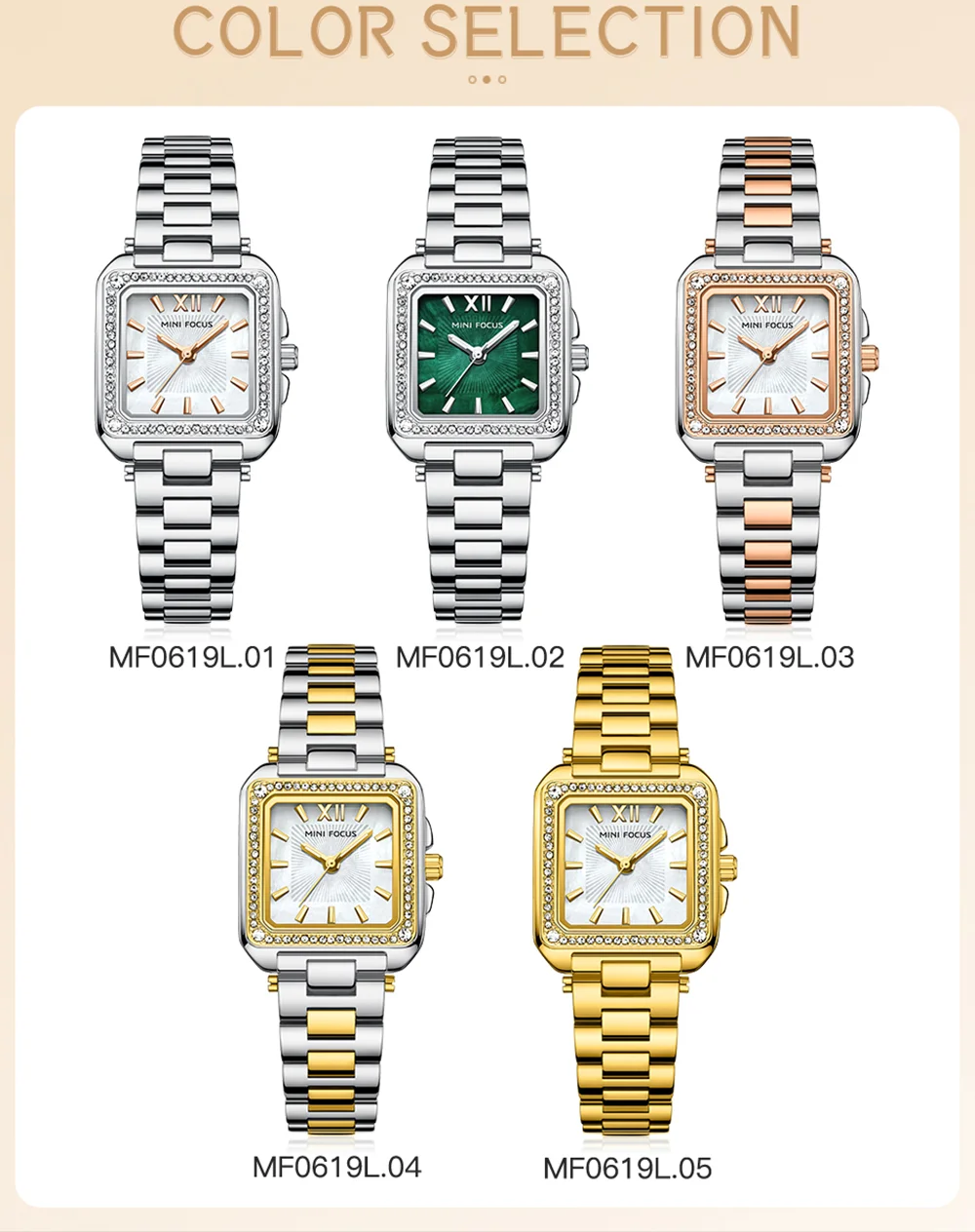
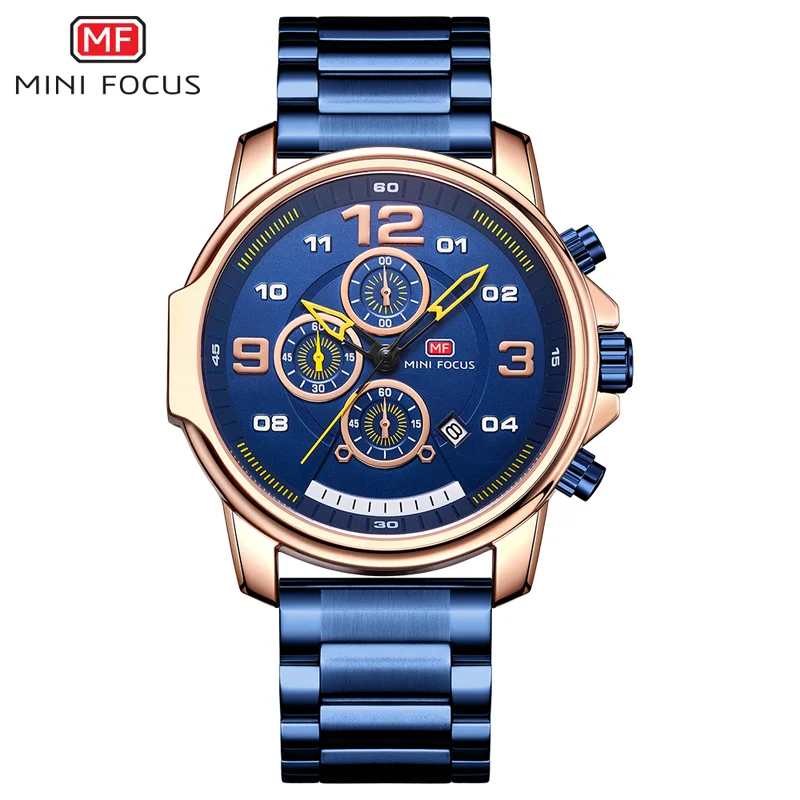
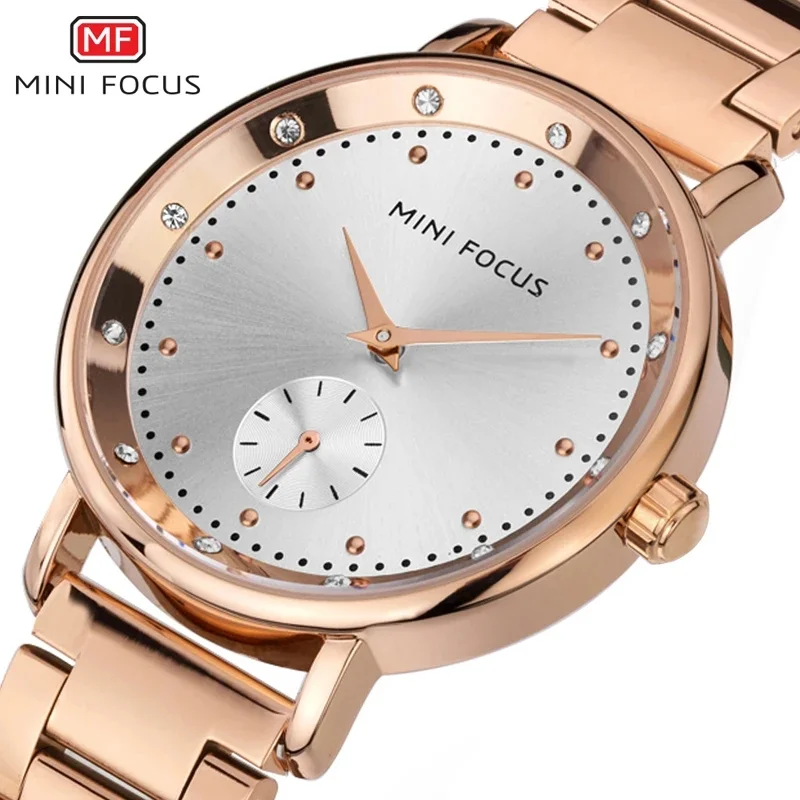
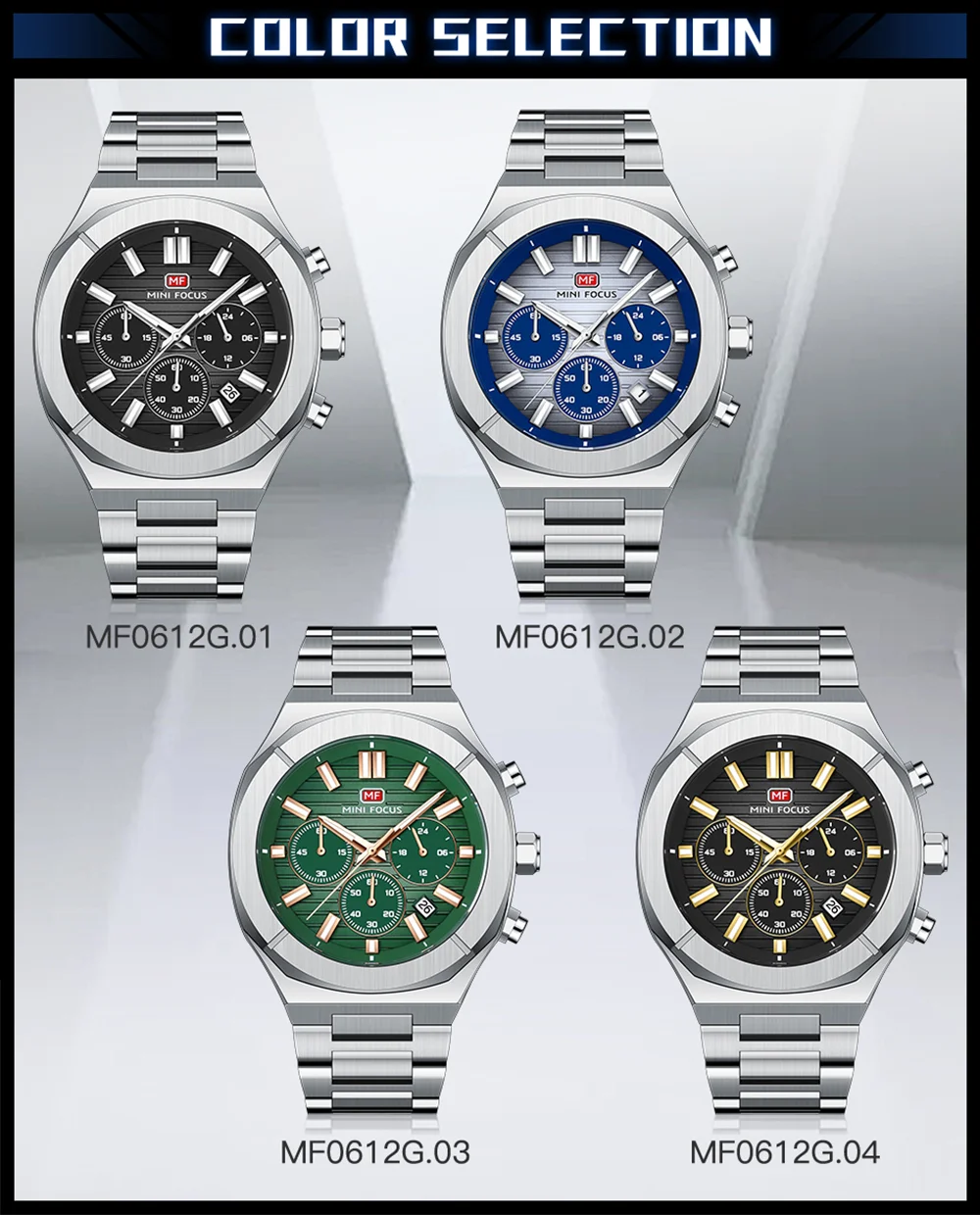
Examples of the same category at different positioning: the MF0612G business chronograph and the MF0619L diamond-case dress watch both run quartz movements but sit in different segments because of their cases, finishing and target customer.
Straps: A Small Part With a Big Perceived Effect
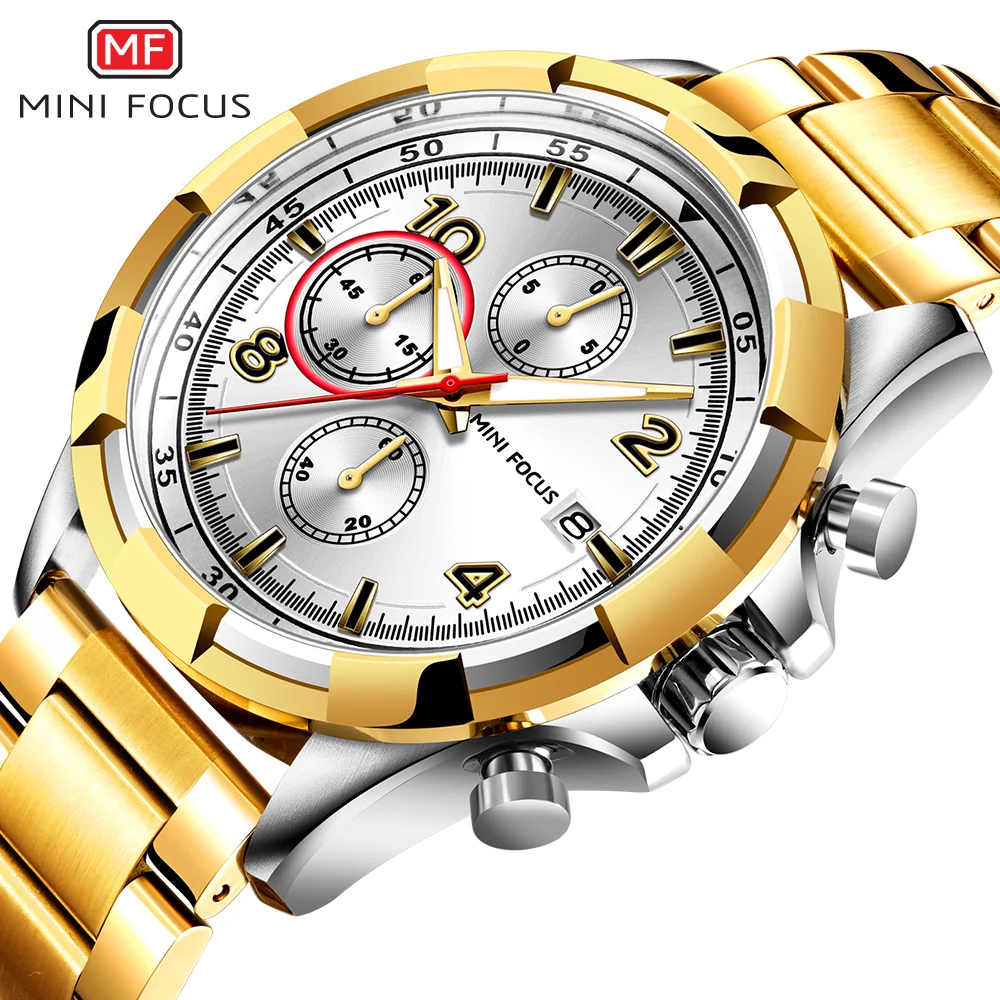
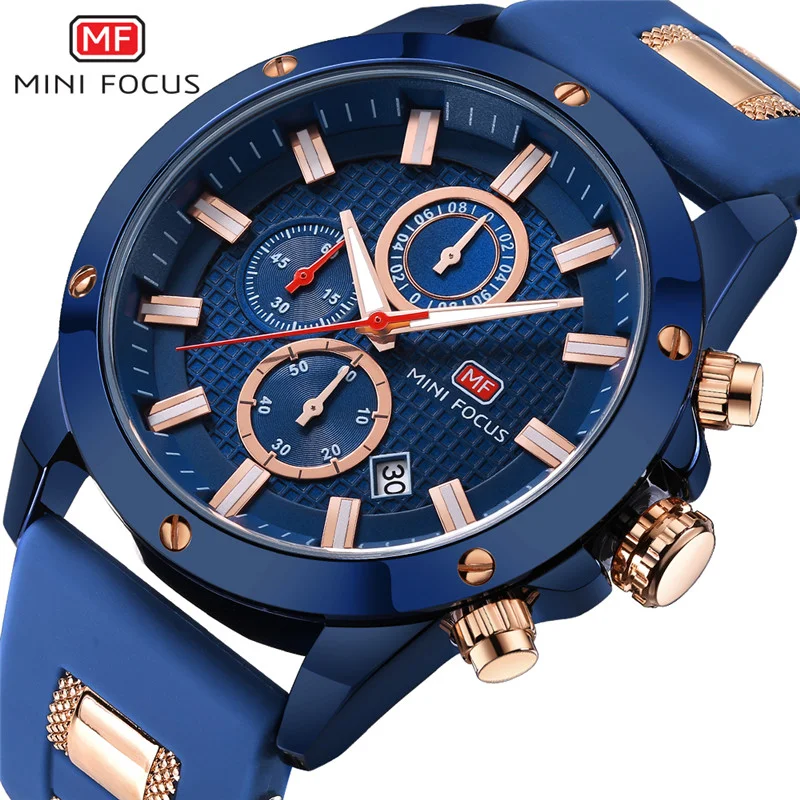
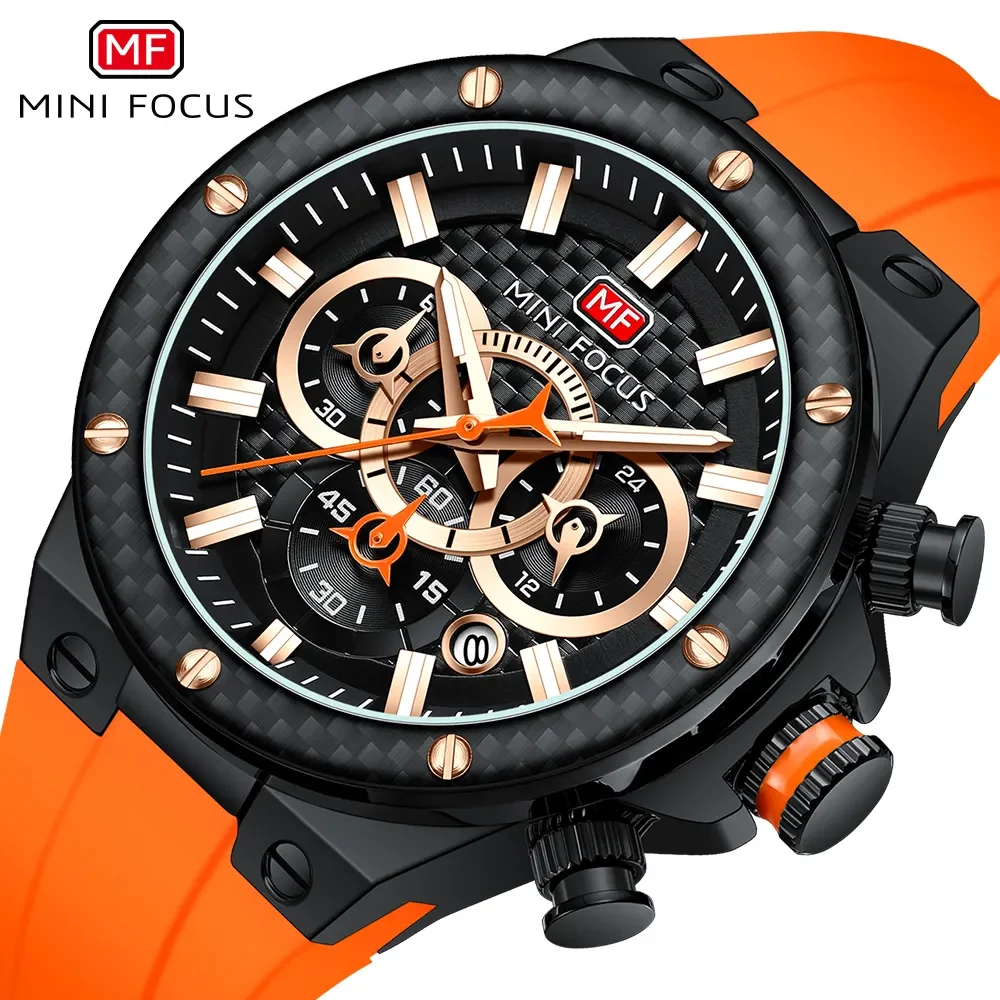
Strap choice changes cost and retail appeal at the same time. A solid steel bracelet like the one on the MF0634G chronograph costs more than a leather strap but lifts the whole product into a higher bracket. Silicone, as on the MF0475G sport model, is the most cost-effective option and suits large, sporty cases. Compare materials in our strap guide.
Volume, MOQ and the Price Ladder
Factory pricing is a ladder: unit price falls as order quantity rises, because setup, tooling and production scheduling are spread across more units. MOQ exists for the same reason - small runs carry disproportionate setup cost. Customization pushes the ladder up: a stock model with your logo printed on the dial is cheaper per unit than a fully custom case, because custom tooling has to be paid for somewhere. Confirm both the MOQ and the price breaks in writing before you compare quotes.
The Hidden Costs Nobody Quotes First
- Tooling and moulds - one-off cost for custom cases or dials, amortized over the order
- Logo application - method affects cost (see our customization guide)
- Packaging - gift boxes, tags and manuals are a real cost line, and often forgotten (packaging guide)
- Certification and testing - where your market requires it
- Freight, insurance, duties and taxes - usually excluded from the unit price and often the surprise that erodes margin
How to Compare Quotes Fairly
Quotes are only comparable when the specification is identical. Build a simple comparison sheet with one row per quote and columns for movement, case material, crystal, strap, plating, logo method, packaging, MOQ, Incoterm and lead time. When the specs are side by side, the cheapest quote is often the cheapest because it specifies less - not because it is better value. This is the same discipline described in our supplier verification checklist.
How to Negotiate
- Buy specification, not just price - asking "what can you improve at this price" often yields more than pushing the number down
- Offer consistency - a predictable quarterly volume is worth more to a factory than a single large order, and is priced accordingly
- Combine models - consolidating several models into one order can reach a better price break than splitting them
- Respect the ladder - if you want a lower unit price, the lever is usually quantity or a simpler specification, not pressure
Why Factory-Direct Pricing Matters
Every layer between the factory and you adds margin without adding product. Buying factory-direct means the quote reflects the actual bill of materials plus the factory's margin - nothing else. That transparency is what lets you build a retail price that leaves room for your own profit.
Frequently Asked Questions
Why is one factory's price so much lower than another's?
Almost always because the specification is different - a lower-cost movement, alloy instead of steel, mineral instead of sapphire, or thinner plating. Compare the bill of materials before concluding one is "cheaper".
Does a higher price guarantee better quality?
No. Price reflects specification and overhead, not necessarily build quality. Verify with samples and a pre-shipment inspection.
Can I get a price for my own design?
Yes - send your design or reference and the factory will quote based on the specification and any tooling required. See our customization guide or contact Mini Focus for a quotation.
Want a transparent factory quote? Contact Mini Focus with your specification and quantity, or browse the catalog to shortlist models first.